-
Feedback
- It was a wonderful experience ! The Great Wall is awesome... and judie was a masterful guide, wonderful !! John was an excellent driver, very crusteruo. Thank you for setting up such a great tour. Susie Was a Great Guide. Give us EveryThing We Wanted to Know. All Arrangement Went Smooth. Mr.Judie Was Good Driver. He Help Everyone In & Out of Van, Good Restaurant & Hotel service. Anton Christopher Grindl
- see more feedback
Discover BeijingParent CategorySite
Taoranting Park
- Taoranting Park dates as far back as the 3rd century BC. The site of Taoranting Park was the eastern urban district of the capital city (Dadu) of the Jin Dynasty. It was the imperial brick kilns during the Ming and Qing dynasties. In 1952, the park was completely redesigned - lakes were dredged, seven small hills formed and pavilions built and became a romantic and peaceful area where visitors can enjoy pleasant walks and relaxing boat trips.
Profile
- ID : 34
- City : beijing
- English name : Taoranting Park
- Chinese name : 陶然亭公园
- Type : Traditional park,
- Level : easy
- Kids : possible
- Elders: Suggested
- Best season : Spring, Summer and Autumn
- Visiting length : 2-3 hours
- Distance to city center : 3.5 km
Introduction of Taoranting Park
-
Taoranting Park covered the Black Dragon Pond in the east, Dragon Spring Temple in the west, Nanheng Street in the north and the city wall in the south.
Taoranting Park got its name after famous Tang poet Bai Juyi's poem:
When the chrysanthemums turn yellow and wine is made,
Lo! my dear friend,
Lets drink to our hearts content and be drunken away
In ecstasy.
Unlike other parks and gardens of the city which were reserved for the emperor and his family, the Taoranting Park was accessible to all. This explains why the park was a popular meeting place for poets and literary men during the Qing dynasty.
Two revolutionaries, Gao Junyu and his girl friend, Shi Pingmei, were buried here.
Photo of Taoranting Park
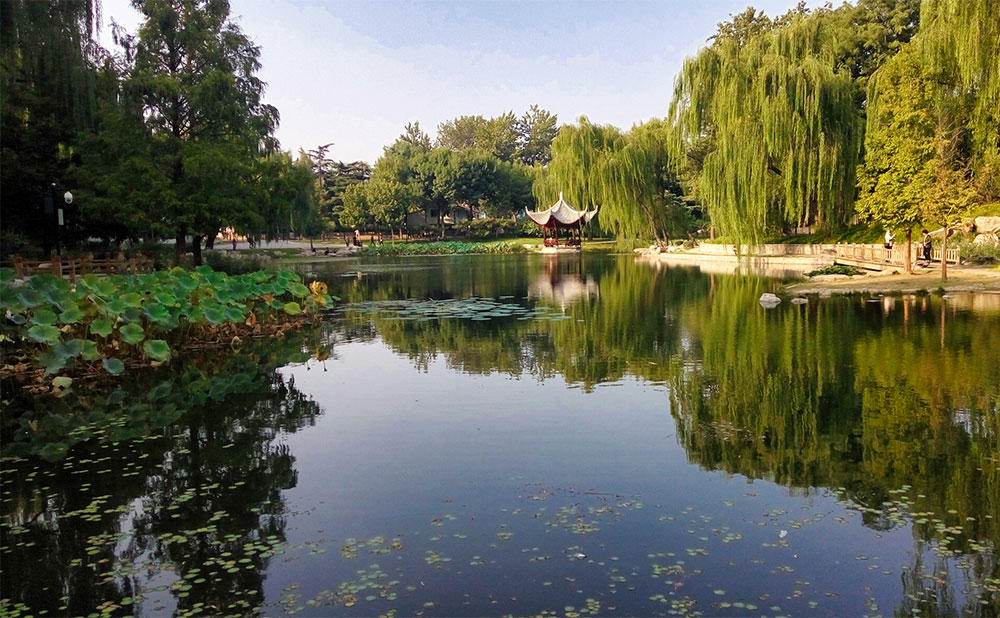
Highlights of visiting Taoranting Park
-
Cibei Temple, Cloud-painted Tower, the Garden of China Famous pavilions
Helper to visit Taoranting Park
- Address in English : No. 19, Taiping Street, Xicheng District, Beijing, China
- Address in Chinese : 北京市西城区太平街19号(护城河北岸)
- Tel : +8610-63511596
- Post code : 100044
- Ticket time : 6:00 - 21:00, 9:00 - 16:30(the Garden of China Famous Pavilions)
- Open time : 6:00 - 21:00, 9:00 - 16:30(the Garden of China Famous Pavilions)
- Closing time : null
- Location : Taoranting Park is around 3.5 km to downtown beijing
- Subway: Take Subway Line 4 and get off at Taoranting Station.
- Public bus:
- Bus 14, 40, 59, 66, 102, 106, 603, night 23, or Special Line 13(Taipingjie Station) to East gate of the park.
- Bus 63, 84, 122, 458, 692, 741, 821, 958, 997, or Special Line 12, 17, 3, or Yuntong 102(Taoranting Gongyuan South Gate Station) to South gate of the park.
- Bus 59, 40, or Special Line 13 or night 23(Zixinluokou Dong Station), Bus 133, 381, or Special Line 14 or night 18, 4(Kaiyangqiao Bei Station) to West gate of the park.
- Bus 59, 40, or Special Line 13, or Night 23(Taoranting Gongyuan North Gate Station) to North gate of the park.
- Private car is the best method to visit Taoranting Park with local tour operator.
Transportation
Admission
- high season : 2 RMB/person.
- shoulder season : 2 RMB/person.
- low season : 2 RMB/person.
Taoranting Park Tour


- BJ-PH-02Spring
- Beijing Five Days Private Spring Tour
Hotel near Taoranting Park
- 5 star/duluxe hotel
- Doubletree by Hilton Beijing
- Guidu Hotel
- 4 star/superior hotel
- Beijing Commercial Business Hotel
- Wanfangyuan Hotel Beijing
- Chenmao Nanyueyuan Hotel
- History of Taoranting Park
-
Excavations showed that this charming park dates as far back as the 3rd century BC. The site of today's Taoranting Park was the eastern urban district of the capital city (Dadu) of the Jin Dynasty. It was the imperial brick kilns during the Ming and Qing dynasties, when court officials and rich men built their private gardens there. Jiang Zao , the Minister of Industry during the reign of Emperor Kangxi, who was in charge of the brick kilns, built three houses at the Temple of Mercy south of the kiln.
Later this place became an attraction for tourists from far away and those scholars who came to the nation’s capital for imperial civil examinations.
In the past century several famous revolutionaries were closely associated with the Taoranting Pavilion. At the end of the Qing Dynasty Kang Youwei, Liang Qichao and Tan Sitong came here to plan the Reform Movement of 1898. Zhang Taiyan was imprisoned in the nearby Dragon Spring Temple for his opposition to the usurpation of state power by Yuan Shikai. In the early years of the Republic of China, Sun Yat-sen attended political meetings in the pavilion, and on several occasions Li Dazhao organized secret revolutionary activities in the most westerly of the three rooms in the northern courtyard of the Zhunti (Cundi) Hall. On the afternoon of August 6, 1920, five progressive societies from Beijing and Tianjin held a joint meeting in the pavilion which was attended by Zhou Enlai and Li Dazhao.
In 1952, the park was completely redesigned - lakes were dredged, seven small hills formed and pavilions built. Today, the park is a romantic and peaceful area where visitors can enjoy pleasant walks and relaxing boat trips.
- Main Scenic Areas of Taoranting Park
-
The main scenic areas in Taoranting Park include Shengchun Mountain House scenic area, the Garden of China Famous pavilions, Taoran Pavilion scenic area and Black Dragon Pool scenic area. There are many famous historical sites around the famous Taoran Pavilion.
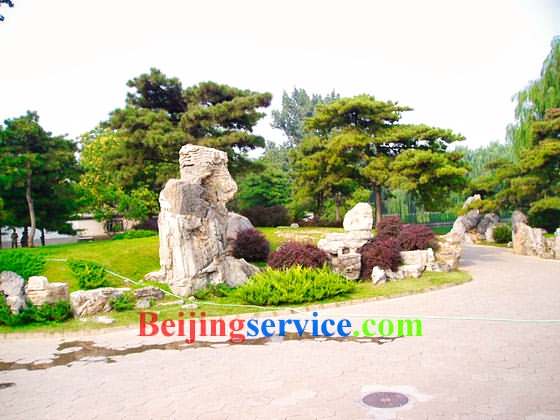
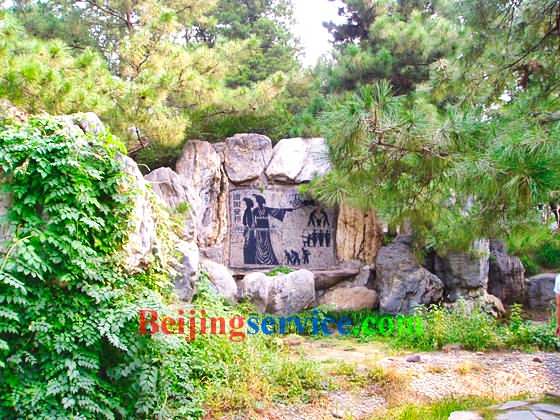
Most outstanding of the gardens sights was the grotesque formation of Taihu Lake rocks designed by Zhang Ran. Zhang Ran designed the rock formations at such famous imperial gardens as the Yingtai at Zhongnanhai, Changchunyuan (later the Summer Palace) and Yuquan Hill.
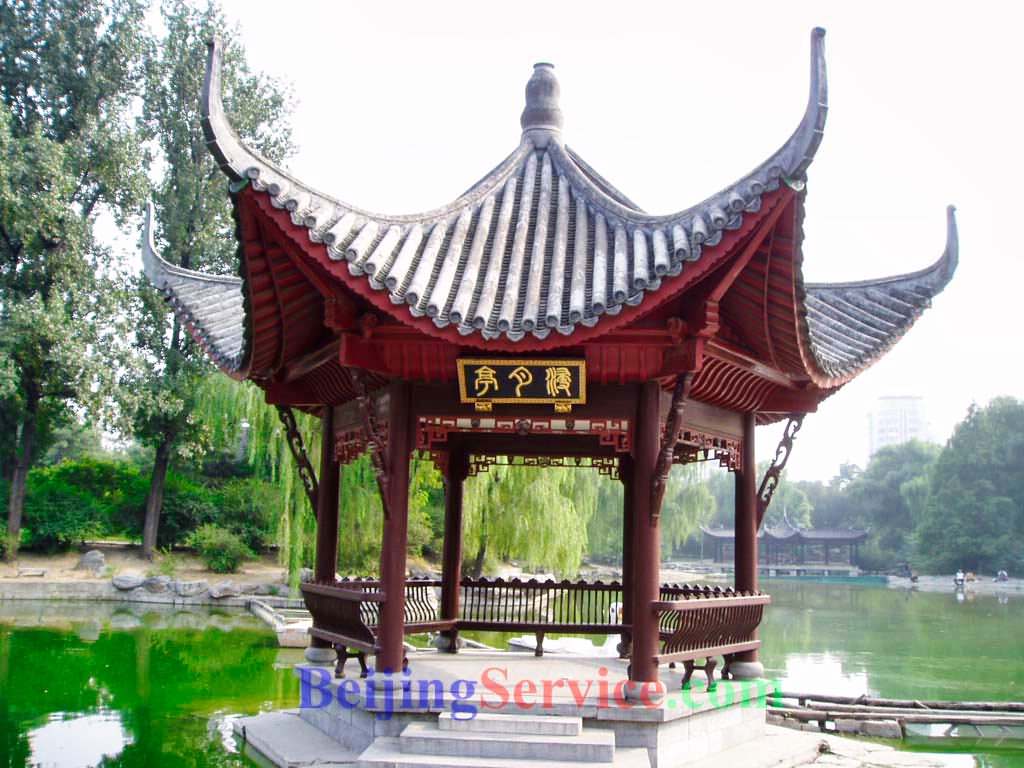
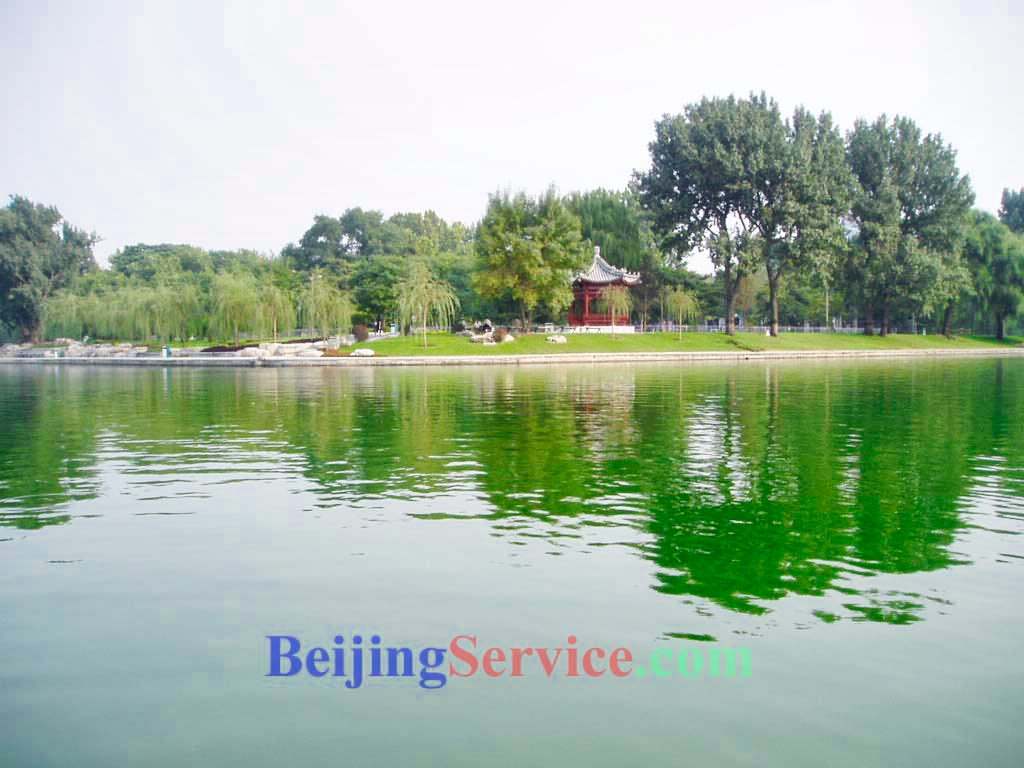
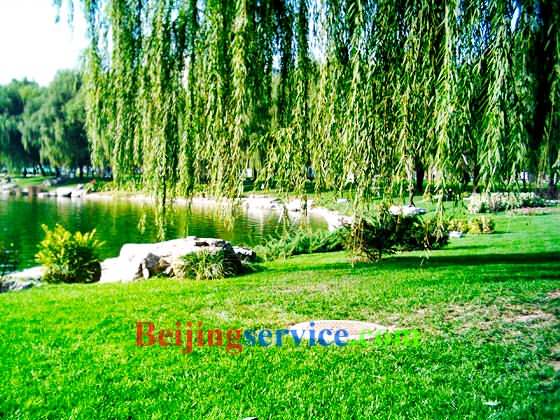
More Photos







Toolkits
Link to Page of Taoranting Park
Beijingservice team provides deep information related with Taoranting Park. Please link to this pae if you like the information.- Taoranting Park
- Taoranting Park dates as far back as the 3rd century BC. The site of Taoranting Park was the eastern urban district of the capital city (Dadu) of the Jin Dynasty. It was the imperial brick kilns during the Ming and Qing dynasties. In 1952, the park was completely redesigned - lakes were dredged, seven small hills formed and pavilions built and became a romantic and peaceful area where visitors can enjoy pleasant walks and relaxing boat trips.
- https://www.beijingservice.com/attractions/taoranting.htm
- Main Architectures of Taoranting Park
-
Cibei Temple and Taorang Pavilion
With a history of more than 700 years, Cibei Temple was built in the Yuan Dynasty. The temple is rigorous and magnificent, with the gate eastward. Covering an area of 2,700 square meters, the Cibei Temple include Hall of the Goddess of Mercy, the Hall of Zhuiti, Wenchang Pavilion, Taorang Pavilion and etc. Taorang Pavilion was built in 1695 during the reign of Emperor Kangxi of the Qing Dynasty. The Black Kiln was still in operation and there were two supervisors, one Manchurian and one Han. The Han supervisor was Jiang Zao, a Minister of Industry of the court. He was a poet and calligraphic master. He built a pavilion in the west of the Cibei Temple and named it "Taorang Pavilion". Due to the natural scenery of this area, it has been a popular place for feudal scholars, poets and literary men. So far, many poetry works have been left. At the gate of the temple was a calligraphic work in gold of Taoran by Jiang Zao and on the temple wall were inset with a rock carving, Ode to Taoranting that sang in the last two verses:
Sorry that I'm not a painter
To draw a picture of listening to the cascading spring
In deep Autumn night.
The temple wall was also inset with the calligraphic work Urban Forest by Wang Yushu.
In modern times, especially after the May Fourth Movement, Li Dazhao, Mao Zedong, Zhou Enlai and other revolutionaries have carried out revolutionary activities here and this area becomes a monumental revolutionary site in Beijing.
- Cloud-painted Tower Southwest of the gourd-shaped islet was a two-storied pavilion, respectively named Cloud-painted Tower and Pure-sound Chamber. Cloud-painted Tower is an imperial garden building built during the reign of Emperor Qianlong of the Qing Dynasty (1736-1795). It was originally located on the east bank of the Zhongnanhai. With the double-storey corridor, carved beams and painted pillars, the building is exquisite and beautiful. It was the place where the emperor went to watch the Taiye Lake, writing and painting. In 1954, Cloud-painted Tower needed to be dismantled because of construction. The architect Liang Sicheng and Premier Zhou Enlai suggested moving the pavilion completely to the south bank of the West Lake in Taoranting Park.
- The Garden of China Famous Pavilions the Garden of China Famous Pavilions is located in the southwest corner of West Lake in Taoranting Park, covering an area of 10 hectares. It was completed in September 1989 and lasted for 4 years. The garden features the most typical pavilions in China. There are 36 pavilions in the garden, of which ten are full sized replicas of famous pavilions in China, including Duxing Pavilion, Orchid Pavilion, Zuiweng Pavilion, and etc.